Artificial intelligence has reshaped how businesses operate online. But as AI becomes more deeply embedded in the digital landscape, the same technology is opening new doors for cybercriminals. Understanding the shift that has taken place is the first step toward protecting your online presence.
AI Changes Everything
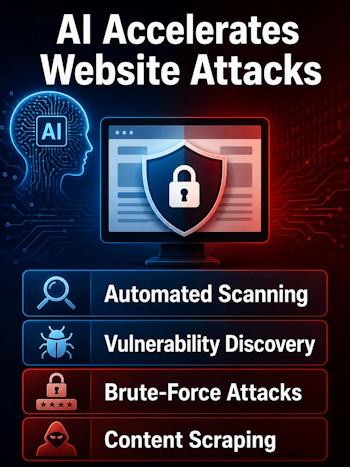 Previously, cyberattacks required a skilled hacker investing significant time and technical knowledge to breach a website. AI has dramatically lowered that barrier. Today, threat actors can automate reconnaissance, identify vulnerabilities at scale, and launch attacks faster than any human team could manually coordinate.
One of the most concerning developments is AI-powered phishing. Where phishing emails once read like poorly translated spam, modern AI generates highly convincing messages that mimic real businesses with unsettling accuracy. For contractors and service businesses with a public web presence, your brand and your clients can be targeted in ways that are increasingly difficult to detect.
AI also enables more sophisticated brute-force credential attacks, automated SQL injections, and content scraping operations that can strip your site’s value and harm your SEO standing without you ever knowing it is happening.
Ongoing Updates are Now Crucial
AI-assisted bots continuously scan for outdated plugins, unpatched themes, and misconfigured settings. If your site is not actively maintained, these bots can find and exploit weaknesses within hours of a vulnerability being publicly disclosed.
A compromised website can quietly redirect visitors to malicious sites, inject hidden links that destroy your search rankings, or expose client contact information submitted through your forms. For a business built on strong name recognition or SEO, a security breach can be as damaging as a slew of bad reviews.
New Safeguards Help Protect You Against the Latest Threats
 The same technology creating new threats is also powering stronger defenses. Modern security platforms now use machine learning to detect unusual traffic patterns, flag suspicious login attempts in real time, and automatically respond to potential intrusions before damage occurs. Modern firewalls can distinguish between legitimate web traffic and bot activity more accurately than traditional rule-based systems, and tools that once required a dedicated IT team are now accessible to small and mid-sized businesses at a reasonable cost.
The key is to stop treating website security as a one-time setup task and start treating it as an ongoing process. Strong authentication protocols, monitored access logs, and a reliable backup system are the foundation of any professionally maintained website.
The Smartest Move Is Letting Your Hosting Provider Handle It
For most business owners, the most reliable path to consistent website security is partnering with a hosting provider that builds protection directly into their service. Rather than tracking update schedules yourself or hoping your plugins are current, the right hosting relationship takes those responsibilities off your plate entirely.
A qualified provider should be fully managing your WordPress platform, handling every core update, theme patch, and plugin refresh promptly. This eliminates the gap between when a vulnerability is disclosed and when your site is fully protected and removes the risk of a mistimed manual update breaking your site’s functionality.
Proactive uptime monitoring is another service your provider should be delivering. Rather than finding out your site is down when a lead calls to ask why they cannot find you online, uptime monitoring catches outages the moment they occur and initiates a response. For a contractor whose website is a primary source of inbound leads, even a few hours of undetected downtime translate directly to lost business.
Security plugin maintenance should also be handled at the provider level. A bulletproof security configuration requires more than installing a plugin and forgetting it. Firewall rules need to stay current, threat databases require regular updates, and scan results need to be reviewed and acted on. When professionals manage this rather than leaving it to the site owner, the standard of protection is meaningfully higher.
Finally, look for a provider that backs their service with a warranty. If your website is compromised or becomes unrecoverable despite their protections, they should commit to fully rebuilding and replacing it at no additional cost for as long as your subscription remains active.
Keep Your Website Working for Your Business
Website security is not a problem that gets solved once and stays solved. The most effective step you can take right now is evaluating your current hosting relationship. Ask whether your provider is handling security updates, monitoring uptime around the clock, maintaining your firewall, and standing behind their work with a warranty. If the answer is unclear, it is worth exploring a provider who takes the latest threats seriously.
Your website is one of your most valuable business assets. The right hosting partner makes sure it continues to serve your business well. Call Top Roof Marketing at 800-795-2187 to learn more about our active website security program and how we help keep client websites protected, monitored, and up to date.